


What is Mixed Palletization
Mixed palletization (also called mixed-case palletization or mixed SKU palletization) is the process of building a pallet from multiple different SKUs, each with its own size, weight, crush limit, and handling rules. It is one of the most common operations in distribution centers, 3PL warehouses, and e-commerce fulfillment sites.
Operators performing mixed palletization deal with constant spatial decisions:
- will this case crush what is underneath?
- Is the pallet stable enough to survive transport?
- What comes next in the sequence?
It is common in store order fulfillment, LTL shipping, omnichannel fulfillment, and 3PLs serving multiple clients.
Experienced workers handle these decisions well. Humans are naturally strong at spatial reasoning and can apply rules on the fly while considering crush risk, upcoming items, and pallet stability. But doing this for eight hours a day, across hundreds of orders, while walking long distances and lifting heavy cases, introduces errors and inconsistencies that compound at scale.
The result:
- Longer pallet-building times due to excessive walking
- Lower picking productivity
- More product damage and higher transport costs
- Physically demanding work that becomes harder as SKU counts rise
This is why some form of assistance in mixed palletization has shifted from optional to essential.
The global mixed-case palletizing system market reached $2.1 billion in 2024, growing at a 7.3% CAGR↗ - a reflection of how broadly warehouses are investing in palletization support. In this article we look at the four main approaches to mixed palletization and when each one makes sense.
4 Types of Mixed Palletization
1. Fully manual mixed palletization
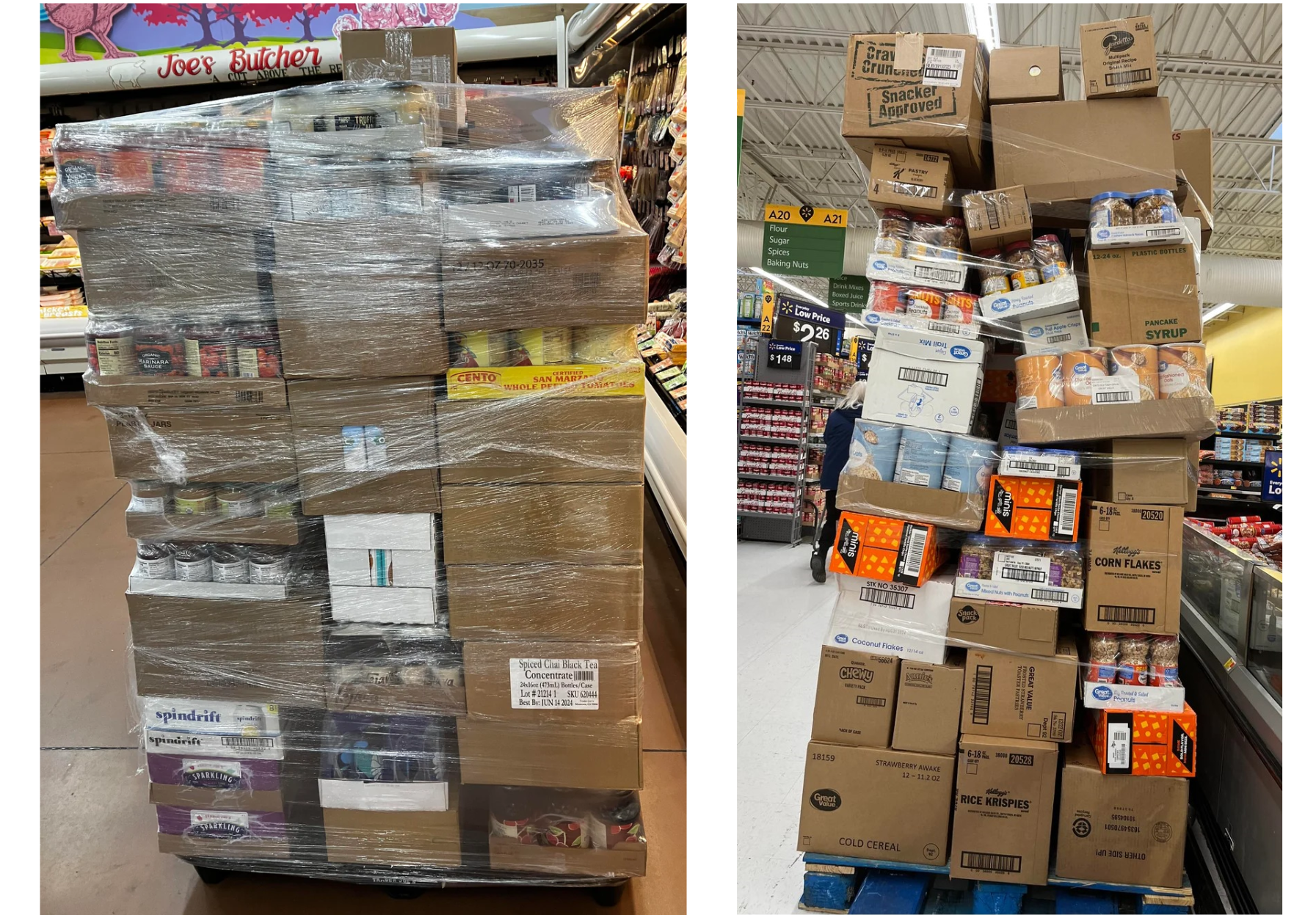
During fully manual mixed palletization, operators walk the warehouse, pick cases, and build pallets using their own judgment.
This approach requires very low investment and technical overhead. Operators handle exceptions flexibly, but this comes at the cost of long walk distances, inconsistent pallet quality, and higher risk of product damage.
Manual palletization scales poorly in both complexity and volume. At some point, adding more people no longer fixes the underlying problems.
Best for:
- Small to mid-size warehouses with limited SKUs, low volumes, and relatively low labor costs
- Sites with low operator rotation to avoid frequent onboarding cycles
2. System-guided mixed palletization
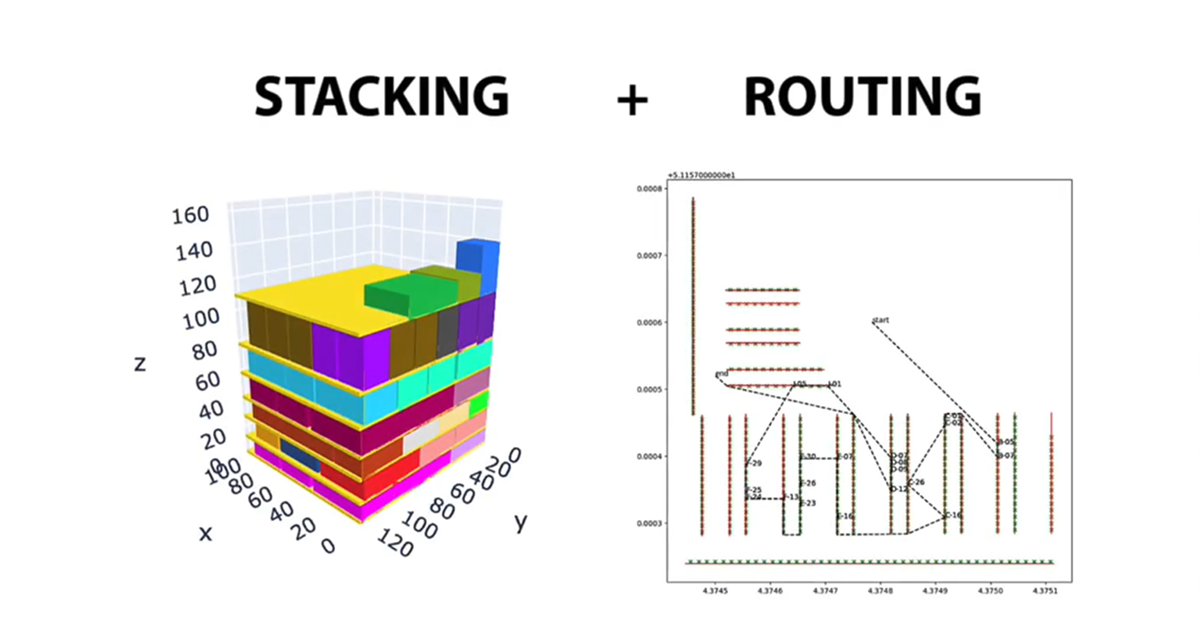
In system-guided mixed palletization, operators are supported in pick route optimization and pallet stacking sequence through software. This guidance typically appears as 2D or 3D stacking instructions on handhelds or tablets. Operators still walk, pick, and place cases, but they follow on-screen guidance instead of relying on memory and tribal knowledge.
New workers can follow visual instructions from day one instead of spending months reaching productivity standards. This also reduces risk when working with temporary staff.
System-guided palletization treats picking and pallet building as a single optimization problem. A pallet will not be stable if operators simply pick whatever is closest. The logic must consider weight, size, orientation, fragility, and sequence at the same time:
- If you optimize for the shortest route, the pallet build suffers
- If you optimize for pallet builds, the walk time grows
Warehouses need to scope and quantify this trade-off at the start to set the project up for success. Warehouse optimization software providers like Optioryx are designed to handle exactly this kind of combined routing and pallet-building problem.
Compared to robots or large automation, software-guided palletization requires very little capital, integration, or training. It is easier to pilot, roll out, and adjust. Once the logic and integration are in place, replicating the solution to another warehouse is mainly a matter of configuration and training, not construction.
Best for:
- Medium to large DCs with high SKU counts and complex orders
- Retail and e-commerce operations with strict compliance requirements
- Sites where retaining operators is difficult and labor shortages are severe
3. System-guided mixed palletization with robots
This approach keeps the same software algorithms and 2D/3D guidance but changes the muscle for pallet movement. Autonomous mobile robots (AMRs) or AGVs carry the pallet between pick locations while operators pick and stack with visual guidance on the robot's screen.
This leads to a significant reduction in pushing heavy loads, but requires a much higher capital expenditure than software-only solutions. Robots work best on top of strong system guidance. Without good algorithms and clear instructions, they risk becoming expensive moving bottlenecks.
Best for:
- Medium to large DCs with high picking volumes
- Operations with stable product dimensions and packaging
.png)
4. Fully automated mixed palletization
At the top end of the automation ladder is the fully automated palletization cell. Conveyors feed cases to robotic or gantry palletizing cells. Algorithms decide case sequencing and robots build pallets automatically.
Fully automated systems can be extremely effective in the right context, but they are typically viable only for large, stable, and well-capitalized operations. The investment runs into the millions, commissioning takes months, and the system is less flexible when product mixes change.
Best for:
- Warehouses with very high throughput and consistent output quality
- Highly repeatable pallet patterns
- Predictable, high-volume operations with long planning horizons

Comparing the Four Approaches
The table below compares the four mixed palletization approaches across investment level, flexibility, productivity impact, and key trade-offs. Each approach has its place. The right choice depends on your volume, SKU complexity, labor situation, and how much guidance or automation your operation actually needs.
For a deeper dive into palletization software options and how they compare, see our 2026 comparison guide.
Why Mixed Palletization Has Become Harder
Several trends are converging to make mixed palletization more difficult than it was a decade ago:
- SKU explosion: more flavors, pack sizes, and packaging formats mean operators face more variety per pallet.
- Omnichannel and e-commerce: smaller orders, more frequent shipments, and tighter lead times increase the pace and complexity of pallet building.
- Retail and customer compliance: strict rules on labeling, pallet height, weight distribution, and stacking sequence leave less room for operator judgment calls.
- Labor shortages and ergonomics: 76% of logistics decision-makers report ongoing workforce shortages↗, with warehouse roles among the hardest to fill. Average turnover sits around 45%↗.
- Rising service expectations: high on-time delivery, near-zero damage, and consistent quality across every shipment.
In this environment, relying purely on manual palletization is increasingly risky. At the same time, going straight to full automation is often too expensive, too rigid, or simply unnecessary for most operations. The middle ground, software-guided palletization, addresses the core problems without the capital commitment or operational disruption of a robotic cell.
How to Choose the Right Approach
There is no single best approach to mixed palletization. The right choice depends on where your operation sits today and where it is heading. Here is a practical decision framework:
Start with software if you have 10+ pickers, growing SKU complexity, or frequent temp workers. Software-guided palletization delivers measurable gains in weeks, not months. It works on top of your existing WMS and does not require infrastructure changes. Companies like pick-and-pack operations are a natural fit.
Add robots when software guidance is already in place and volume justifies the investment. Without strong algorithms underneath, robots become expensive equipment moving suboptimal pallets around the warehouse.
Go fully automated only when throughput is very high, pallet patterns are repeatable, and you have the capital and patience for a multi-year project with significant commissioning time.
The most common mistake is jumping to hardware before the logic is right. Most warehouses get more value from fixing the optimization problem first.
The key insight is that picking and pallet building are not separate problems. Optimizing one without the other leaves performance on the table. Software-guided approaches solve both simultaneously, which is why they deliver 10-25% productivity improvements even without hardware changes.
Questions?
Mixed-case palletization means building a pallet with multiple different products — varying sizes, weights, and fragility levels. Unlike single-SKU pallets where every case is identical and stacking patterns are simple, mixed-case requires the software to calculate placement order, weight distribution, crush risk, and height constraints for every unique combination. The number of possible configurations grows exponentially with the number of distinct SKUs on a pallet, which is why manual planning breaks down at scale.
Software-guided palletization typically delivers a 10-25% improvement in picking productivity by optimizing both the pick route and the pallet build sequence. Because it requires minimal capital and works on top of existing WMS systems, most warehouses see measurable results within weeks of deployment.
Yes. One of the biggest advantages of software-guided palletization is that new or temporary workers can follow visual stacking instructions from day one. Instead of relying on months of experience, operators get clear guidance on where each case goes, which significantly reduces onboarding time and error rates.
3D palletization software calculates the best way to stack items on a pallet by considering size, weight, and stability. It helps reduce damage and make better use of space.
Not necessarily. Pulse works as a standalone webapp where you upload order data and get pallet plans without any WMS integration — useful for testing and for operations that don't want to modify their WMS. For ongoing automated pallet planning in a live warehouse, WMS integration improves the workflow, but it is not a prerequisite with every tool.